
Quick answer: espuma is the Spanish word for foam. In the kitchen it is a light, airy foam made by pouring a smooth, flavored liquid or purée into a whipped cream dispenser, charging it with nitrous oxide and dispensing it like whipped cream. It can be sweet or savory, hot or cold.
How espumas work
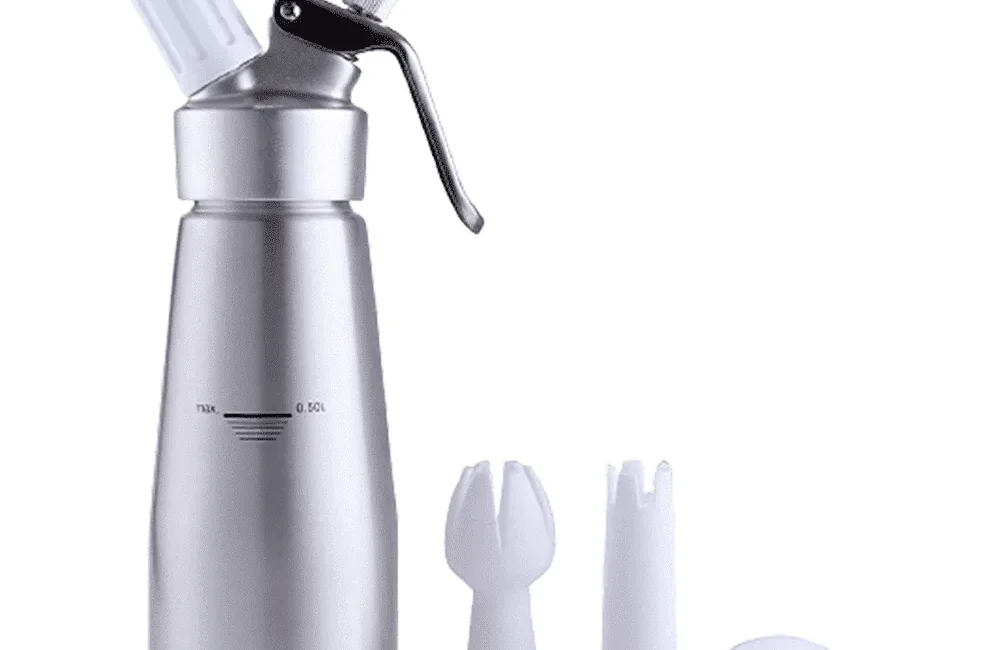
A culinary foam is a stabilized liquid with air suspended in it. In a dispenser, nitrous oxide dissolves into the base under pressure and forms fine bubbles as it is dispensed. Fat, proteins or added stabilizers keep those bubbles from collapsing; it is the same principle as why nitrous oxide is used for whipped cream.
What you can make into an espuma
- Fruit and vegetable purées
- Broths and stocks
- Cream-based sauces and soups
- Coffee, chocolate and dessert bases
- Cocktail foams for drinks
How to make an espuma, step by step
- Blend the base until completely smooth.
- Pass it through a fine sieve. Any lumps can block the dispenser nozzle.
- Add a stabilizer if the base is thin: gelatin, agar-agar or lecithin. Cream-based bases usually do not need one, because the fat helps the foam hold.
- Pour the base into the dispenser, never above the maximum fill line, and close the head.
- Use only the charger type and maximum quantity approved in the siphon manual. Tank charging needs a manufacturer-approved complete system; compare our cream charger tanks. See how to use a cream charger tank.
- Shake well, then dispense with the nozzle pointing down.
Cold and hot espumas
Cold espumas should be chilled for about two hours before dispensing so the foam sets. Hot espumas are kept warm by standing the dispenser in a warm, not boiling, water bath; only use a dispenser that its maker says is suitable for hot contents. Dispense just before serving, because foams slowly collapse on the plate.
Ideas to try
- Parmesan foam: warm cream infused with grated Parmesan, strained and served warm over pasta or risotto.
- Fruit espuma: a sieved berry or mango purée, lightly sweetened and set with a little gelatin, served cold with desserts.
- Cocktail foam: a fruit or citrus base with a stabilizer, dispensed on top of a drink.
- Coffee foam: sweetened coffee mixed with cream for a topping on iced drinks.
For sweet toppings made the same way, see our whipped cream dispenser recipes and browse whipped cream dispensers.
Safety: nitrous oxide is sold for food and drink preparation only. Never inhale it; the U.S. FDA warns that inhaling nitrous oxide products can cause serious injury or death. Cylinders are under high pressure and escaping gas is extremely cold, so keep them away from heat, children and pets.
Common espuma problems
- Runny foam: the base is too thin or too warm; add a stabilizer or chill it longer.
- Nozzle blocked: the base was not sieved finely enough.
- Foam collapses quickly: serve immediately, and consider a little more fat or gelatin in the base.
Espuma vs mousse vs whipped cream
Whipped cream is aerated cream. A mousse is usually set with whipped cream or egg whites and holds its shape for hours. An espuma is any flavored liquid turned into a light foam in a siphon, served at once, and can be savory as well as sweet.
Sweet foams: easy mousse recipes, chocolate mousse and cheese foam.
Espuma in English
Espuma is the Spanish word for foam or froth (plural espumas). In English-language kitchens the word is used for a culinary foam made in a whipping siphon: a flavored liquid aerated with nitrous oxide and served at once.
Frequently asked questions
What is an espuma?
Espuma is the Spanish word for foam. In cooking it means a light, airy foam made from a flavored liquid or purée that is aerated in a siphon (whipped cream dispenser) charged with nitrous oxide.
Do I need gelatin to make an espuma?
Not always. Cream-based espumas usually hold on their own because the fat helps. Thinner bases such as juices or broths often need a stabilizer like gelatin, agar-agar or lecithin.
Can espumas be served hot?
Yes. Keep the dispenser in a warm water bath, not boiling, and only use a dispenser rated for hot contents.
How many chargers does an espuma need?
Use the charger type and maximum quantity specified for your siphon model and preparation. Bottle size alone does not establish the permitted dose. Use a tank only if the manufacturer approves the complete charging system.
Who made espuma famous?
Culinary foams made with a siphon became widely known through modern Spanish cuisine in the 1990s and are now used in restaurants around the world.
What does espuma mean in English?
Foam. Espuma is the Spanish word for foam or froth; in cooking it means a light foam made in a whipping siphon.